Table of Contents
Short-Form Content Distribution: The Complete Guide
The complete guide to short-form content distribution: the four-stage pipeline, volume economics, platform-native formatting, and metrics that matter.


Short-form video is where attention lives now. TikTok, Instagram Reels, YouTube Shorts, and Facebook Reels are the discovery layer of the modern internet: the place where films find audiences, songs find listeners, and brands find customers who were not looking for them. Yet most teams still treat short-form as an afterthought, posting a clip or two per week and wondering why nothing compounds.
This guide covers the full discipline of short-form content distribution: what it is, why volume is the variable that matters most, how the distribution pipeline works end to end, and the operating principles behind campaigns that generated billions of views.
What short-form content distribution actually means
Distribution is everything that happens after the edit. Most teams obsess over production quality and spend almost nothing on the question that determines reach: how many feeds will this content actually enter, in how many forms, over what period of time?
Short-form distribution is the systematic answer. It means converting source content into a high volume of platform-native clips and publishing them across a coordinated network of pages, on a schedule, with a feedback loop that scales what works. It treats reach as an engineering problem, not a lottery.
The core principle: distribution beats production
A flawless clip posted once will lose to thirty good clips posted across a month, every time. The reason is structural. Short-form platforms are testing machines: every post is an experiment that the algorithm runs against a sample audience. More posts means more experiments, more data, and more chances for the platform to find the audience that wants your content.
“The campaign that ships 2,900 posts does not need any single one of them to go viral. The campaign that ships ten posts needs a miracle.”
Real campaign data bears this out. Homestead reached 300 million views through 2,921 posts: high volume, compounding reach. Code 3 reached 30 million from just 200 posts because the framework was dialed in before scale. Both worked, but both worked through deliberate volume, not a single lucky upload.
The distribution pipeline, end to end
Stage one: engineer the framework
Before editing, study what already cuts through in the niche. Which hooks, formats, and emotional angles are winning for comparable content? Document them. This framework is what separates a campaign from random posting: every clip produced afterward executes against a tested hypothesis.
Stage two: repurpose at scale
Mine the source material for self-contained moments: the surprising claim, the emotional beat, the exchange that works without context. A single hour of footage typically yields 30 or more distinct clips once you count hook variants and platform formats.
Stage three: distribute through a network
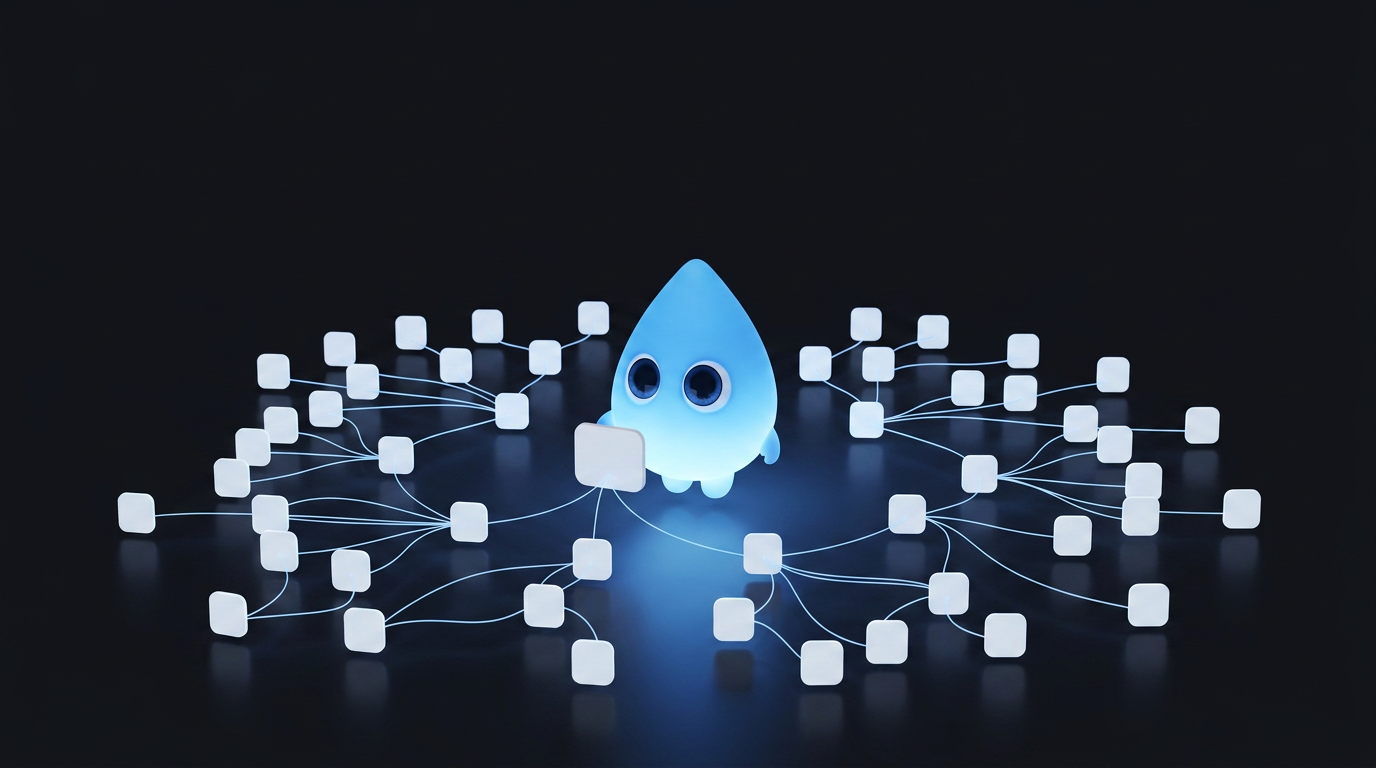
One account is a single point of failure. A network of pages spreads the campaign across many audience pockets, lets the same moment be tested with different framings, and means no single throttled post can stall the campaign.
Stage four: optimize weekly
Track every clip. Kill the formats that stall, scale the formats that run, and feed the patterns back to editors as new defaults. A campaign in week four should look meaningfully different from week one, because it has learned.
Already sitting on hours of long-form content? Start clipping and distribute thirty posts from a single recording.
The operating rules that separate winners
- Hook in the first second. Retention in the opening seconds decides distribution. If the first second is setup, cut it.
- Format natively per platform. TikTok pacing is not Reels pacing is not Shorts pacing. The same moment ships in different cuts.
- Caption everything. Most feed viewing starts muted. On-screen text carries the hook whether sound is on or not.
- Schedule across weeks. A month of consistent presence beats a one-day flood. Feeds reward accounts that keep showing up.
- Let data pick winners. Opinions about which clip is best are hypotheses. Retention curves are answers.
Measuring what matters
Vanity metrics hide the truth of a distribution campaign. The numbers that matter are blended CPM (total spend divided by thousands of views), retention rate on the first three seconds, engagement per post by format, and the trend line of views per post over the campaign, which shows whether the optimization loop is actually learning.
Benchmark honestly
Paid social impressions typically cost $5 to $15 per thousand. Well-run organic distribution lands between $0.30 and $1.00. If your campaign's blended CPM is above paid benchmarks, the framework is broken, not the channel.
The common failure modes
Most short-form efforts die one of three deaths. The first is under-volume: posting twice a week and concluding the channel does not work, when the channel was never actually tested. The second is cross-posting laziness: one file blasted identically everywhere, ignoring platform-native formatting, so every platform ranks it as mediocre. The third is no feedback loop: shipping clips without tracking which formats run, so month three repeats month one's mistakes at month one's CPM.
Createable runs the full pipeline as a managed system: framework, editors, network, optimization. Apply for the current intake.
Where to start
Audit your library first: hours of usable footage, the moments worth extracting, and the campaign window that gives the effort a deadline. Then decide whether to build distribution infrastructure in-house, which takes quarters, or plug into an existing network, which takes weeks. Either way, the principle holds: in short-form, the content you already own is the cheapest reach you will ever buy, and distribution is the multiplier sitting on top of it.
.png)
FAQs
Do I need to create new content?
In some cases, if the content isn’t a fit. Generally no — we transform your existing library into viral-ready shorts.
What counts as short-form content?
Vertical video under roughly 90 seconds, built for feed-based discovery on TikTok, Instagram Reels, YouTube Shorts, and Facebook. The defining trait is not length alone but context independence: a short-form clip must work for a viewer who has never heard of you and gives you under three seconds.
Is short-form distribution only for big studios?
No. The same pipeline scales down: a podcaster with a weekly episode, an artist with live footage, or a brand with product video can all run the engineer, repurpose, distribute, optimize loop. What changes is volume and budget, not the mechanics.
How many clips should I post per week?
Serious distribution starts at daily posting per platform, and campaigns at scale ship dozens of clips per week across a page network. Below that threshold you are not generating enough data to learn what works, which is the real cost of low volume.
Should I post the same clip on every platform?
The same moment, yes. The same file, no. Each platform rewards different pacing, caption style, and length, so the master clip should be reformatted natively per platform rather than blasted identically everywhere.
Does short-form distribution help long-form content?
Directly. Clips function as trailers for the full episode, film, or song. Campaigns consistently show lift in long-form watch time, streams, and search volume during heavy clip distribution windows, because short-form is where discovery happens and long-form is where depth lives.
Can I run distribution in-house?
You can, if you can staff editors, manage a page network, and run weekly optimization. Most teams underestimate the operational load: the editing is the easy half, and the distribution infrastructure is what takes years to build.
.png)

UGC vs Clipping Campaigns: Which One Actually Drives Reach?
UGC produces ad creative; clipping produces organic reach. The honest comparison of costs, failure modes, and the sequence that outperforms both.